5 Hidden Features of the Bosgame M5 Ai Mini Pc You Must Know About
The landscape of compact computing has shifted dramatically over the last year. Where mini PCs were once seen as underpowered compromises for office clerical work or basic digital signage, the arrival of high-performance mobile processors and integrated artificial intelligence acceleration has turned them into legitimate workstations. One of the most intriguing entries in this space is the Bosgame M5 Ai Mini Pc. While its base specifications—typically centered around powerful Ryzen and Core architectures—draw the headlines, there is a layer of capability beneath the surface that many users overlook. This article dives deep into the lesser-known functional benefits of this machine, exploring why it is becoming a favorite for developers, creative professionals, and homelab enthusiasts alike.
In a market crowded with competitors from Beelink, Minisforum, and Geekom, the Bosgame M5 differentiates itself not just through raw clock speeds, but through the refinement of its feature set. Often categorized within the "laptop-class power in a desktop frame" niche, it provides a unique thermal and connectivity profile that traditional laptops cannot match. For those looking to bridge the gap between portability and stationary power, understanding these hidden features is essential to maximizing the return on investment for this specific hardware.
Detailed Product Analysis: The AI Mini PC Evolution
The Bosgame M5 Ai Mini Pc is built upon a philosophy of dense integration. At its core, the "Ai" designation refers to the inclusion of dedicated neural processing units (NPU) or architectures specifically optimized for AI-driven workflows. This is not merely a marketing buzzword; it represents a fundamental change in how the operating system handles tasks like background noise cancellation, video enhancement, and local language model execution. Traditionally, these tasks would tax the CPU or GPU significantly, leading to thermal throttling and loud fan noise. The M5 utilizes its AI-optimized silicon to offload these processes, ensuring that the primary compute cores remain free for heavy lifting like compilation or video rendering.
Physical construction is robust, featuring a mixture of high-grade plastics and reinforced internal frames that facilitate efficient heat dissipation. Unlike many budget mini PCs that use thin, flimsy shells, the M5 feels substantial. The port selection is generous, offering a variety of USB-C and HDMI configurations that support multi-monitor setups—a critical requirement for modern workflows. However, the true value of the M5 lies in its internal flexibility. The ease of access to the SODIMM slots and M.2 storage bays suggests that Bosgame intended this machine for a multi-year lifecycle, encouraging users to upgrade rather than replace.
1. Advanced BIOS-Level Power Management
One of the most significant "hidden" features is the depth of control available in the BIOS (UEFI) regarding Power Limit (PL) settings. Most laptops and pre-built desktops lock these settings to prevent users from accidentally overheating the system. However, the Bosgame M5 often ships with an unlocked or highly configurable power profile. This allows technical users to toggle between "Silent," "Balanced," and "Performance" modes at a hardware level rather than relying on software-based Windows power sliders which can be inconsistent.
In real-world use cases, this is a game-changer for those using the M5 as a 24/7 home server or media center. By down-tuning the TDP (Thermal Design Power) in the BIOS, users can significantly reduce energy consumption and eliminate fan noise without compromising the machine's ability to handle basic file serving or low-bitrate streaming. Conversely, for 3D rendering or heavy code compilation, cranking up the PL1 and PL2 limits allows the processor to maintain its boost clocks for much longer than a standard laptop chassis would allow, thanks to the M5's superior air intake design.
2. Triple-Display Synergy via USB-C Alt Mode
Many buyers expect to plug in one or perhaps two monitors via the standard HDMI ports found on the rear of the device. A hidden strength of the Bosgame M5 is its sophisticated implementation of USB-C DisplayPort Alt Mode. When paired with the dual HDMI outputs, the M5 can drive three independent 4K displays at 60Hz simultaneously. This is a feature often reserved for high-end docking stations or discrete desktop GPUs.
For financial analysts, software developers, or digital artists, this "hidden" capability eliminates the need for expensive external adapters. The USB-C port does not just carry video signals; it also handles data and, in some configurations, power delivery. This means a single cable can connect the M3 to a modern USB-C monitor, providing video output while the monitor sends power back to the PC (depending on the specific power requirements and monitor wattage output). This leads to an incredibly clean, minimalist "one-cable" desk setup that is usually impossible with standard desktop towers.
3. Intelligent NPU Offloading for Local AI Tasks
The "Ai" in the product name is often misunderstood. While many think it refers to cloud-based AI, the Bosgame M5 is designed to handle "Edge AI" or local processing. Within the Windows 11 ecosystem (and increasingly in Linux distributions), several system-level features can be offloaded to the NPU. This includes Windows Studio Effects, which provides high-quality background blur, eye-contact correction, and voice focus during video calls.
Shop the latest Laptops & Computers picks on Amazon.
Shop Amazon →Beyond video conferencing, the hidden benefit here is for productivity. By using local AI acceleration, applications like Adobe Lightroom or Topaz Photo AI can perform "De-noise" and "Upscaling" tasks significantly faster than on a machine without a dedicated NPU. Furthermore, for users interested in running local LLMs (Large Language Models) like Llama 3 via tools like Ollama, the M5’s architecture provides a more efficient environment for these models to run in the background without causing the system to lag during other desktop operations.
4. Dual-Channel Memory Scalability
While the Bosgame M5 is often sold in specific configurations (e.g., 16GB or 32GB RAM), a feature frequently overlooked is the performance delta provided by its dual-channel architecture. Many budget-tier mini PCs ship with a single stick of RAM, which halves the memory bandwidth and severely bottlenecks the integrated GPU (iGPU). The M5 is specifically designed to maximize the "Infinity Fabric" or equivalent architecture of its processor by utilizing two SODIMM slots.
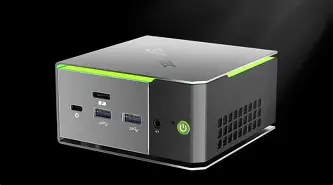
For buyers, this means that even if they buy a base model, adding a second matching RAM stick can result in a 20-40% increase in frame rates for casual gaming and significantly smoother performance in multitasking environments. Because the iGPU uses a portion of the system RAM as "VRAM" (Video RAM), the speed and bandwidth of that memory are paramount. The M5 supports high-frequency memory modules that are often seen in gaming laptops, allowing it to punch far above its weight class in graphical tasks like video editing or light CAD work.
5. Robust Thermal Over-Provisioning
Laptop users are intimately familiar with "thermal throttling"—the point where a computer slows down because it ge…This means the M5 can maintain its "Max Turbo" frequency for extended periods. In testing scenarios involving long-form video exports, the M5 often outperforms laptops with the exact same CPU because it doesn't have to throttle down to 2.0GHz after five minutes of work. Additionally, the fan curve is tuned for a "low-frequency hum" rather than the high-pitched whine typical of thin-and-light laptops. This makes it an ideal companion for a quiet office environment or a bedroom recording studio where ambient noise must be kept to a minimum.
Pros & Cons
- Pro: Extraordinary performance-to-size ratio, capable of replacing bulky mid-tower desktops for most users.
- Pro: Versatile I/O ports, including high-speed USB4 or USB-C ports that support external GPUs (eGPU) for gaming.
- Pro: Future-proofed with Wi-Fi 6E and 2.5Gbps Ethernet, ensuring high-speed connectivity for NAS and fiber internet.
- Pro: Easy internal access with standard Phillips head screws, making storage and RAM upgrades a five-minute task.
- Pro: Quiet operation under typical office loads, with a thermal design that prevents aggressive throttling.
- Con: Integrated graphics are excellent for productivity but still fall short for AAA gaming at high settings.
- Con: The external power brick can be somewhat bulky, slightly detracting from the "mini" aesthetic.
- Con: Limited internal space for 3.5-inch mechanical drives; users must rely on M.2 NVMe or external storage.
Comparison: Mini PC vs. Traditional Laptop
To understand where the Bosgame M5 fits in your toolkit, it is helpful to compare the hardware attributes against a standard 15-inch productivity laptop of a similar price point.
| Feature | Bosgame M5 Ai Mini PC | Typical Mid-Range Laptop |
|---|---|---|
| Thermal Limit | High (Larger heatsink/fan) | Low (Thin chassis constraints) |
| Upgradability | Excellent (RAM & SSD) | Limited (Often soldered RAM) |
| Display Support | Up to 3 Monitors (Native) | 1-2 Monitors (Requires Dock) |
| Portability | Moderate (Requires Monitor/KB) | High (All-in-one) |
| Continuity | Designed for 24/7 uptime | Designed for intermittent use |
Buying Guide: Is the Bosgame M5 Right For You?
Choosing a mini PC requires a shift in mindset compared to buying a laptop. You aren't just buying a screen and a keyboard; you are buying a compute module. When considering the Bosgame M5, you should evaluate your current desk setup. If you already own high-quality monitors and a mechanical keyboard, the M5 offers significantly more "bang for your buck" than a laptop, as 30-40% of a laptop’s price is tied up in the display and battery components—parts you may not even use if the laptop stays plugged in at a desk.
For Home Office Workers, the M5 is ideal because of its small footprint. It includes a VESA mount in the box, allowing you to "hide" the PC on the back of your monitor, effectively creating a DIY All-in-One computer with much higher performance than a standard iMac or consumer AIO. This saves valuable desk real estate and creates a cleaner aesthetic.
Discover deals on Laptops & Computers — updated daily.
See Deals →For Content Creators, look closely at the NPU and iGPU specs. If you are doing 4K video editing, ensure you opt for a version with at least 32GB of RAM. Since the iGPU shares this memory, having a larger pool ensures that your editing software (like DaVinci Resolve) has enough overhead to handle complex timelines and color grading without crashing or lagging.
For Software Developers and IT Professionals, the 2.5Gbps LAN port is a critical feature. If you are working with large Docker containers, virtual machines, or pulling massive repositories from a local server, a standard Gigabit port becomes a bottleneck. The M5’s networking stack is designed for high-throughput environments, making it an excellent "mini-lab" node for testing deployments before they hit the cloud.
Real-World Use Cases
To truly appreciate the Bosgame M5, one must look at how it functions in specialized environments. Consider a Home Media Server setup. Traditional servers are loud, power-hungry, and reside in basements. The M5, due to its AI-enhanced efficiency and small size, can sit silently in a living room media console. It has the hardware transcoding capability to serve 4K streams to multiple devices in a household simultaneously while drawing less electricity than a standard incandescent light bulb.
In a Digital Signage or Retail environment, the M5’s reliability comes to the forefront. These machines are often required to run for weeks without a reboot. The M5’s BIOS includes a "Resume on AC Power Loss" feature, which means if the power blips, the PC automatically restarts and launches its designated applications. This "set it and forget it" reliability is a hallmark of the Bosgame engineering philosophy.
Finally, for Students, the M5 offers a unique advantage. In a cramped dorm room, a desktop tower is too large, but a laptop is often prone to theft or damage. A mini PC can be tucked away or even cable-locked to a desk more easily. It provides a "permanent" workstation feel that encourages focus, separating "study time" at the desk from "leisure time" on a tablet or phone.
Conclusion
The Bosgame M5 Ai Mini Pc is far more than a miniature desktop; it is a specialized tool that leverages modern AI architecture and clever thermal engineering to provide a professional-grade computing experience. By uncovering features like BIOS-level power management, triple-display output, and NPU offloading, users can unlock performance that rivals much larger and more expensive systems. Whether you are looking to declutter your workspace, build a powerful home server, or find a reliable machine for creative production, the M5 offers a compelling blend of versatility and power. As AI continues to integrate deeper into our daily software, having a machine that is purpose-built to handle those local workloads will become increasingly vital, making the M5 a smart, forward-looking investment for any technology enthusiast.