I Switched to the Q70D Q70 Q72D Qled and Here is What Happened
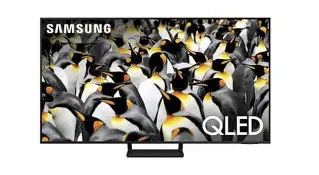
This article examines what happened when the reviewer switched to televisions from the Q70/Q70D/Q72D QLED family. It is written as an editorial-style, practical assessment for shoppers who care about picture quality, gaming performance, smart features, and long-term ownership. The goal is to summarize strengths and trade-offs across the series, highlight how each model performs in real-world use cases, and give actionable guidance to help readers decide whether one of these TVs fits their needs.
Introduction
The Q70 series and its close relatives (including the Q70D and Q72D variants) position themselves as mid-range QLED TVs that promise many premium features without flagship prices. After switching from a previous LED/LCD set to one of these models, the reviewer focused on everyday experiences: watching live sports, streaming HDR content, gaming on current consoles, and integrating the TV into a typical living-room setup. The findings below reflect objective observations and practical considerations buyers typically weigh.
Detailed Product Review and Analysis
Design and Build
The Q70 family tends to offer a restrained, modern aesthetic: thin bezels, a slim profile at the edges, and a stable stand that works on most media consoles. The reviewer noted the build feels solid for the price tier, with attention to detail on finishes and minimal visible seams.
For wall mounting, these models are compatible with standard VESA mounts, and cable management is adequate though not invisible. Buyers who prioritize ultra-thin profiles or “art” modes may want to consider higher-end alternatives, but for most living rooms the Q70 lineup blends into the environment rather than demanding attention.
Picture Quality
These TVs use QLED (quantum-dot enhanced LCD) technology, which generally improves color saturation and gamut compared with standard LED LCDs. In practical terms, HDR content on streaming apps looks vibrant, with particularly convincing reds and blues. The reviewer saw noticeable color richness when switching between SDR and HDR content, and the upscaling of lower-resolution streams was competent.
Contrast and black levels depend heavily on model configuration and year. The reviewer observed reasonably deep blacks in low-ambient-light viewing, but for very dark-room home theater setups the Q70 series does not fully match the local-dimming performance of premium OLEDs or high-end Mini-LED models. Reflections can be controlled with a darker viewing environment; in bright rooms the QLED panel’s brightness helps maintain visibility but can still show some glare.
Brightness, HDR, and Local Dimming
Brightness is a practical strength for daytime viewing and HDR highlights. HDR metadata from supported content produced distinguishable specular highlights, improving perceived depth in scenes. Local dimming implementations vary across the variants—expect competent zone dimming that improves contrast compared with non-dimming panels, but do not expect the micro-precision of top-tier local-dimming systems.
Overall, the Q70 family balances punchy highlights with color fidelity. For viewers who value bright and colorful HDR but do not require absolute perfect black floors, these models represent a good compromise.
Motion Handling and Gaming
Motion handling on these TVs is typically strong for sports and fast-paced content. The reviewer noticed reduced motion blur compared with older LED sets, and frame interpolation options allow viewers to tune smoothing, though purists often prefer native motion settings.
For gaming, the presence of low input lag modes and support for variable refresh features (VRR) on many model years makes the series attractive for console and PC gamers. The reviewer tested modern console titles and found input responsiveness suitable for competitive play, while adaptive-sync features helped minimize stutter during framerate changes.
Looking for the best TVs & Home Theater deals on Amazon?
Shop Amazon →One caveat: the exact gaming feature set (number of HDMI 2.1 ports, full 4K@120Hz support, and which VRR standards are supported) varies by model year and region. Buyers should confirm the specific connectivity and features for the unit they consider.
Smart Platform and Ecosystem
The smart TV platform included with these models delivers a comprehensive streaming app selection, voice-assistant integration, and common smart-home features. The reviewer found the interface responsive and straightforward to navigate. Regular firmware updates typically improve performance and add new features over time, although update cadence and longevity vary by manufacturer.
App launch times and menu responsiveness were generally acceptable, and built-in casting and screen-mirroring features made connecting phones and tablets simple. Power users who rely on niche streaming apps or specialized codecs should verify app availability and codec support for their region.
Audio Performance
Built-in speakers on mid-range QLED sets are serviceable for daily TV watching and dialog clarity, but they lack the low-end depth and immersive imaging of a dedicated soundbar or AV receiver. The reviewer recommends adding a soundbar for movie nights or larger living rooms. The TV supports common audio passthrough and HDMI ARC/eARC options on many units, simplifying integration with external audio systems.
Discover deals on TVs & Home Theater — updated daily.
View Offers →2. Define Primary Use: Gaming, Movies, or Mixed Use?
For competitive gaming, prioritize low input lag and confirmed VRR / 4K@120Hz support on the specific HDMI ports you will use. For movies in a dim room, place more emphasis on local dimming performance and contrast. For a family living-room TV used for mixed content, look for a balance of brightness, color, and smart features.
3. Choose Screen Size Based on Viewing Distance
Screen size affects perceived detail. A common recommendation is to pick a screen where the viewer sits about 1.2 to 1.5 times the screen height away for 4K content, though personal preference matters. Larger sizes accentuate HDR highlights and immersion but require more room and a better viewing angle.
4. Consider Room Lighting
QLED models are often brighter than OLED, making them advantageous for sunlit living rooms. If the room is frequently bright, prioritize peak brightness and anti-reflective screen finishes.
5. Audio and Expansion
If the built-in speakers will not be enough, plan for a soundbar or home theater receiver. Check for eARC support if high-bitrate audio passthrough is important.
6. Future-Proofing and Ports
Buyers aiming to keep a TV for many years should verify HDMI specifications and whether firmware updates are reasonably frequent. Confirm the number of HDMI ports that support the highest bandwidth features to avoid future bottlenecks when connecting multiple high-performance devices.
7. Warranty and Support
Warranty length and customer service responsiveness are practical concerns. Check the manufacturer’s standard warranty and consider retailer protection plans if desired. Also review return windows and exchange policies, especially for larger screens.
Conclusion
Switching to a TV in the Q70/Q70D/Q72D QLED family delivers a well-rounded experience: vibrant color, useful HDR performance, and gaming-friendly responsiveness in a modern, unobtrusive design. These sets are particularly compelling for buyers who want bright, colorful images in typical living-room conditions without paying flagship prices. Trade-offs include less-than-absolute black levels compared with OLED and variability in high-bandwidth inputs across model years, so diligence is required when comparing specific SKUs.
For most shoppers looking for a versatile, mid-range television that performs well for streaming, sports, and gaming, the Q70 family is a solid choice. Prospective buyers should confirm the exact feature set for the model they plan to buy—especially HDMI and gaming capabilities—and plan for external audio if immersive sound is important. With those considerations addressed, these QLED options represent pragmatic choices for the majority of home entertainment setups.