I Switched to the X T30 Ii and Here is What Happened
Introduction
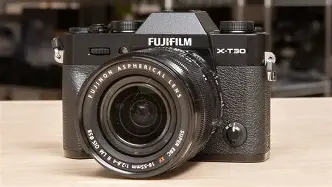
The X T30 Ii occupies a curious place in the mirrorless camera market: compact, capable, and aimed at photographers who want strong image quality and a compact body without stepping up to the higher-priced flagship models. This article examines what happened when a photographer switched to the X T30 Ii for everyday shooting, travel, and occasional video work. It covers practical impressions, technical strengths and weaknesses, comparisons with close alternatives, and a buying guide for readers who are deciding whether the X T30 Ii fits their needs.
First impressions and user experience
The reviewer found the X T30 Ii to be immediately approachable. The body is small and light, making it comfortable for all-day carry during street photography and travel. The control layout follows Fujifilm’s familiar tactile design: dedicated dials for shutter speed and exposure compensation, a compact grip, and a responsive rear touchscreen. For users who value a direct, tactile shooting experience, these controls speed up operation and reduce menu diving.
Out of the box, the camera boots quickly and the menu system is logically organized for photographers accustomed to Fujifilm’s layout. The touchscreen makes quick menu adjustments and focus-point placement straightforward, while physical dials allow for one-handed changes during active shooting. Many buyers care about how quickly a camera responds when a decisive moment occurs; the X T30 Ii performs well in this regard for stills-focused work.
Image quality and color science
The X T30 Ii delivers the image quality expected from a modern APS-C mirrorless camera. Its JPEG color rendering and film simulation modes are especially notable—Fujifilm’s film simulations remain one of the brand’s hallmark strengths. For photographers who prefer minimal post-processing, the built-in simulations offer attractive straight-out-of-camera results, with nuanced skin tones, pleasing contrast, and a film-like character that many buyers seek for documentary, portrait, and street work.
Raw files retain a wide latitude for adjustments. Highlights and shadows respond well to recovery in post, and the sensor resolution provides enough detail for large prints and tight crops. For landscape and portrait shooters who value color and tone over sheer resolution, the X T30 Ii’s output is competitive with other APS-C models.
Autofocus and performance
Autofocus performance is a central concern for buyers who shoot action, events, or moving subjects. The X T30 Ii uses a hybrid autofocus system designed to balance subject detection and precise focus. In the reviewer’s hands, single-shot autofocus was accurate and consistent across a range of light conditions. For subjects that move predictably—walks, cyclists, and gentle sports—the tracking held up reliably.
That said, for very fast or erratic action (e.g., fast-paced sports or wildlife flight scenes), some competitors with deeper continuous-AF development or faster frame rates may exhibit an edge. Many users will find the X T30 Ii’s AF more than sufficient for everyday needs, street work, portraits, and casual action, but dedicated sports or wildlife shooters should evaluate performance against specialist alternatives.
Video capabilities
The X T30 Ii’s video feature set is attractive for hybrid shooters who record casual clips and short-form content. It supports 4K recording suitable for vlogs, travel footage, and social media content. Video quality benefits from Fujifilm’s color processing and picture profiles. However, buyers who plan to do extended video production should note a few limitations that can affect workflow: battery life under continuous recording, thermal limits under long 4K sessions, and the absence of certain higher-end video features often found on pricier models.
For run-and-gun content creators, the compact size and good in-camera color can outweigh these limitations. When paired with lenses that have good stabilization (either optical stabilization in the lens or gimbal support), the camera is capable of producing polished, shareable video.
Looking for the best Electronics deals on Amazon?
View Offers →Ergonomics and handling
Ergonomics are subjective, but the X T30 Ii’s compactness is its defining trait. Photographers who prioritize portability will appreciate the small footprint and the balanced feel when paired with compact primes. The grip is modest, so large hands or photographers using big telephoto lenses might prefer a larger body or an auxiliary grip for extended shooting sessions.
Menus are reasonably straightforward once one is familiar with Fujifilm’s terminology. The reviewer recommends customizing the function buttons and leveraging the Q (Quick) menu to access commonly used settings—this transforms the camera into a fast and intuitive tool in real-world shooting scenarios.
Battery life and storage
Battery life is typical of a compact mirrorless camera: it gets a solid day of casual shooting, but heavy users should plan for at least one spare battery on long outings. The single memory card slot works for most users, but professionals or those wanting immediate redundancy will take note that there is no dual-slot fail-safe built into this model. For travel photographers who rely on long shooting days without the chance to recharge, a small power bank (if the camera supports USB charging) and additional batteries are practical considerations.
Lens ecosystem and expandability
A major advantage of choosing the X T30 Ii is access to the Fujifilm X-mount lens lineup. Buyers typically care about …For photographers who want to expand into portrait, landscape, or telephoto work, the X-mount has reliable options. Third-party lens makers also offer increasingly capable lenses for the system, giving buyers flexibility with cost and optical preferences.
What buyers typically care about — and how the X T30 Ii responds
- Image quality: Delivers attractive JPEGs and flexible RAW files; Fujifilm’s color science is a standout.
- Portability: Extremely compact for an APS-C body—great for travel and street photographers.
- Autofocus: Solid for everyday use; reliable face/eye detection for portraits, suitable tracking for moderate action.
- Video: Good 4K capabilities for hybrid shooters, but not a replacement for a dedicated cinema camera.
- Battery life: Acceptable for casual use; heavy shooters should carry spares.
- Lens options: Strong native lens lineup with many excellent compact primes.
- Stabilization: No in-body image stabilization (IBIS) — buyers who need stabilized video or low-light handheld shots should plan accordingly with stabilized lenses or gimbals.
Pros & Cons
- Pros:
- Compact and lightweight body that encourages shooting more often
- Excellent color rendition and versatile film simulations
- Responsive controls and tactile dials for a photographer-first experience
- Good stills image quality with flexible RAW processing
- Access to a strong lens ecosystem
- Cons:
- No in-body image stabilization (IBIS), which limits handheld low-light and video stability
- Single card slot — no built-in redundancy
- Battery life can be limiting for long shoots without spares
- Not the top performer for very fast continuous-action tracking compared with some competitors
Comparison table: X T30 Ii versus alternatives
| Model | Sensor | Autofocus | Video | IBIS | Best for |
|---|---|---|---|---|---|
| X T30 Ii | APS-C, ~26MP (Fujifilm X-series) | Hybrid AF with face/eye detection; solid for everyday use | 4K up to 30p; Full HD options for slow motion | No | Travel, street, hybrid stills/video, enthusiasts |
| Older X T30 | APS-C, ~26MP | Comparable AF; similar feature set | 4K up to 30p | No | Budget-conscious Fujifilm fans seeking compact performance |
| Sony a6400 | APS-C, ~24MP | Very fast AF with advanced tracking | 4K up to 30p | No (on many models) | Action, hybrid shooters who prioritize AF speed |
| Canon EOS R10 | APS-C, ~24MP (RF mount) | Advanced subject detection AF | 4K up to 60p (on some variants) | No | Users seeking higher frame-rate 4K and Canon’s color/profile ecosystem |
Real-world use cases
Street and travel photography
Because of its compact size and pleasant color rendering, the X T30 Ii is well-suited to street and travel photographers. It slips into a small bag or hangs comfortably on a neck strap for days of wandering. The film simulations let photographers produce distinct looks on the go, and the responsive controls make fast exposure and aperture adjustments straightforward.
Portraits and everyday portraits
Portrait shooters will appreciate the accurate skin tones and reliable face/eye detection. While studio photographers who require tethered workflows and multi-light setups may prefer larger bodies, hobbyists and small-studio portrait shooters can achieve professional-looking results with appropriate lenses and lighting.
Hybrid content creation
Creators producing social media content, travel vlogs, or short videos find the camera’s image quality and color attractive. The size makes it easier to handle with a small gimbal or on a tabletop rig, but users who emphasize long-form video should evaluate battery life and thermal considerations for extended takes.
Shop the latest Electronics picks on Amazon.
See Deals →Hobbyist wildlife and sports
The X T30 Ii can handle casual sports or wildlife photography, especially when paired with telephoto lenses. However, for dedicated sports photographers or birders pursuing fast-moving subjects in challenging conditions, bodies with higher continuous shooting speeds and more aggressive tracking algorithms will provide better results.
Buying guide
This section helps readers decide whether the X T30 Ii matches their needs and what to consider when purchasing.
Who should buy the X T30 Ii?
- Photographers who prioritize portability without sacrificing image quality
- Travel and street photographers who want a compact, capable system
- Enthusiasts who appreciate Fujifilm’s color science and film simulations
- Hybrid shooters who make short-form video and stills, but who do not require professional video features
Who should look elsewhere?
- Photographers who require in-body image stabilization (look at higher-tier Fujifilm models or competitors with IBIS)
- Sports and wildlife professionals who need ultra-fast continuous AF and very high frame rates
- Users seeking extensive dual-card redundancy for mission-critical shoots
What to pair it with
Lens choice has a bigger impact on final images than the body for many photographers. For an ideal compact kit, the reviewer recommends pairing the X T30 Ii with one or two compact primes (for example, a 23mm or 35mm equivalent) to stay light and flexible. If interested in portraits, a 50mm (or equivalent) medium-tele prime will produce pleasing subject isolation. When video stabilization is needed, consider lenses with optical stabilization or using a small gimbal.
Accessories and practical tips
- Spare battery: Carry at least one extra battery for full-day shoots.
- Memory card: Use a fast SD card to ensure smooth 4K recording; confirm card compatibility with the camera’s requirements.
- Protective bag: A small camera bag or padded sling keeps the kit accessible and protected during travel.
- L-bracket or grip: If the photographer prefers a larger hold or shoots vertically often, an aftermarket grip can improve ergonomics.
- Lens choice: Invest in one sharp prime and one versatile zoom to cover most scenarios.
Price and value considerations
The X T30 Ii aims to deliver great image quality and a refined shooting experience in a compact package. Buyers must balance the camera’s strengths—color, portability, and control—with its trade-offs—absence of IBIS and single card slot. For many users, the combination of Fujifilm’s color science, lens options, and camera ergonomics represents strong value. Budget-conscious buyers should compare used or previous-generation bodies to find the best price-to-performance ratio.
Final thoughts and conclusion
After switching to the X T30 Ii, the reviewer concluded that it excels as a compact, versatile tool for photographers who prioritize color, portability, and a tactile shooting experience. It is not a perfect one-size-fits-all solution: the lack of in-body stabilization and single card slot are meaningful caveats for some users, and high-speed action photographers may prefer rivals optimized for continuous tracking and frame rates.
For travel, street photography, portraits, and hybrid content creation, the X T30 Ii offers a strong combination of image quality, Fujifilm’s respected color science, and a small form factor that encourages shooting more often. Readers considering the camera should evaluate how the body’s strengths align with their use cases, factor in lens choices and accessories, and weigh the trade-offs against alternatives. When matched to the right user, the X T30 Ii is a capable and enjoyable camera that rewards everyday use with consistently pleasing images.