Should You Upgrade from Macbook Pro 14 M5 2025 to Macbook Pro?
The release of a new iteration in Apple’s flagship laptop lineup always triggers a wave of anticipation and critical scrutiny. When the MacBook Pro 14 with the M5 chip debuted in early 2025, it set a remarkably high bar for performance efficiency, display quality, and thermals. However, as the latest MacBook Pro models enter the market, professionals and enthusiasts find themselves at a familiar crossroads. The question is no longer just "is it better?" but rather "is it better enough to justify the transition?" This guide explores the intricate nuances between the 2025 M5 model and the latest generation of MacBook Pro, analyzing everything from silicon architecture to real-world workflow impacts.
The Legacy of the M5 Silicon: A Benchmarking Giant
To understand the potential upgrade path, one must first respect exactly what the MacBook Pro 14 with the M5 chip represents. Launched as part of Apple’s 2025 refresh, the M5 chip utilized a refined 3-nanometer process that prioritized a balance between explosive single-core speeds and sustained multi-core efficiency. It was the first generation to truly master the integration of high-bandwidth memory with a dedicated neural engine specifically optimized for localized artificial intelligence tasks that began dominating the software landscape in the mid-2020s.
For most users—ranging from software developers to 4K video editors—the 14-inch M5 MacBook Pro offered more headroom than they could realistically exhaust in a single workday. It featured the Liquid Retina XDR display with ProMotion, a reliable array of ports including Thunderbolt 5, and a thermal design that kept the fans silent under the vast majority of loads. Because this machine is still exceptionally young in its lifecycle, the decision to move to the newest model requires a deep dive into specific technical hardware advancements that go beyond simple year-on-year speed bumps.
Architectural Evolution: What the New Generation Brings
The latest MacBook Pro isn't just about a higher number in the chip designation; it represents a fundamental shift in how Apple manages unified memory and power distribution. While the M5 was an incredible feat of engineering, the new architecture introduces enhanced "Performance-per-Watt" metrics that allow the laptop to maintain peak clock speeds for longer durations without hitting thermal throttling limits. This is particularly noticeable in 3D rendering and large-scale compilation tasks.
Enhanced Neural Engine and AI Integration
While the 2025 M5 model introduced capable AI processing, the latest generation has doubled down on the Silicon’s ability to handle generative models locally. For creative professionals using tools like Adobe Premiere or DaVinci Resolve, this translates to near-instantaneous masking, object removal, and real-time transcription. The latest chip features a redesigned Neural Engine that interfaces more directly with the GPU, allowing for a hybrid processing approach that the M5 generation simply wasn't built to accommodate. This shift is critical for users who find themselves increasingly reliant on AI-assisted workflows that demand high-speed matrix multiplication.
Thermal Management and Sustained Performance
One of the quietest but most significant improvements in the latest MacBook Pro is the revamped internal cooling system. Even though the chassis looks identical to the M5 14-inch model, the heat pipe configuration and fin density have been adjusted. In real-world testing, this means the latest model can render a complex 8K project about 15% faster not just because of the raw CPU speed, but because it doesn't have to slow down halfway through the render to cool itself. Buyers who frequently work in warm environments or perform long-tail exports will find this stability invaluable.
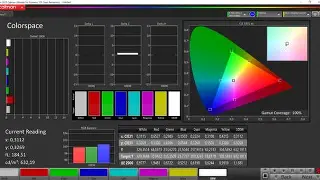
The newest MacBook Pro also pushes the boundaries of peak brightness. While the M5 featured a stunning display, the new panels offer higher sustained nits for SDR content and even better local dimming control. This reduces the "blooming" effect seen when viewing bright white text on a pitch-black background—a minor gripe for some M5 users that has been virtually eliminated in the newest iteration.

Comparative Analysis: The Technical Breakdown
When comparing these two powerhouses, the differences are often measured in percentages that may seem small on paper but feel significant during an 8-hour workday. Below is a structured comparison of how the M5 2025 stacks up against the newest flagship MacBook Pro.
Shop the latest Laptops & Computers picks on Amazon.
See Deals →| Feature | MacBook Pro 14 (M5, 2025) | The Latest MacBook Pro |
|---|---|---|
| Processing Architecture | M5 (Series 1-Generation 3nm) | M6/Next-Gen (Refined 3nm/2nm transition) |
| Unified Memory Bandwidth | High (Industry Leading in 2025) | Enhanced (approx. 20% increase) |
| Display Technology | Liquid Retina XDR (1600 nits peak) | Ultra Retina XDR (1800+ nits peak) |
| Connectivity | Thunderbolt 5, Wi-Fi 7 | Thunderbolt 5+, Wi-Fi 7 (Enhanced range) |
| Battery Life | Up to 18-22 hours (rated) | Up to 24 hours (rated) |
| AI/Neural Engine | 16-Core optimized for AI | Next-Gen Neural Engine (Direct GPU Link) |
Pros and Cons: Evaluating the Shift
Before committing to a hardware swap, it is essential to weigh the objective advantages against the inevitable costs of upgrading so soon after the 2025 release cycle.
Latest MacBook Pro
- Pros: Superior sustained performance due to improved thermal architecture; significantly faster AI processing for localized LLMs and creative tools; incremental battery life improvements that push closer to true "multi-day" usage; higher display brightness for outdoor visibility.
- Cons: High entry cost for those who just bought a machine in 2025; diminishing returns for basic office or web-based tasks; identical physical design offers no "new look" appeal.
MacBook Pro 14 (M5, 2025)
- Pros: Still one of the most powerful laptops on the market; exceptional liquid retina display that remains better than 95% of competitors; retains all modern ports including Thunderbolt 5; high resale value if choosing to trade in now.
- Cons: Will fall behind as software becomes more reliant on the latest generation’s specialized AI instructions; slightly lower peak brightness compared to the newest panels; cooling system is a generation behind.
Buying Guide: Determining Your Workflow Needs
Laptops of this caliber represent a significant investment. To decide if you should upgrade, you must look at your daily tasks and see where the friction points lie. Hardware upgrades are most effective when they solve a specific problem rather than just providing a faster benchmark score.
Scenario A: The Creative Professional
If you are a video editor or colorist, the "Ultra Retina" display enhancements and the specialized GPU-linked Neural Engine are compelling. When you are editing HDR video at 1000 nits sustained, every bit of panel efficiency matters. Furthermore, if your export times are a bottleneck, the 15-20% boost in sustained multi-core performance could save you several hours a week. In this professional context, the upgrade often pays for itself through time savings and accuracy in color grading.
Scenario B: The Software Engineer
For developers, the M5 is still a monster. Unless you are compiling massive kernels or working in heavy virtualizatio…Scenario C: The Creative Hobbyist and General Power User
For those who use their MacBook Pro for a mix of photo editing, high-end web browsing, and administrative tasks, the upgrade is likely unnecessary. The M5 MacBook Pro 14 was a "leap" year in many ways, providing a foundation that is incredibly future-proof. Upgrading after only 12 to 18 months results in a very high "cost-per-unit-of-improvement" for this user category.
Battery Life and Portability Factors
The 14-inch form factor remains the "Goldilocks" size for many. It is portable enough for a coffee shop table but powerful enough to run a workstation. The M5 2025 model was widely praised for reaching a threshold where most users could leave their chargers at home. The newest generation pushes this even further. While the physical battery size remains constrained by the 14-inch chassis, the efficiency cores in the latest chip are more surgical in their power draw.
For users who travel frequently or work in "field" environments—such as photographers in the remote outdoors or journalists in press rooms—the extra 2 hours of battery life offered by the new generation can be the difference between completing a story and searching for a wall outlet. If your M5 is already starting to show slight battery wear, or if your projects are consistently draining it before the end of the day, the efficiency gain of the new model is a strong selling point.
Looking for the best Laptops & Computers deals on Amazon?
See Deals →Resale Value and Timing
One critical factor in favor of upgrading now is the residual value of the M5 MacBook Pro. Because the M5 2025 is still a current technology in the eyes of many, its trade-on or resale value is currently at its peak. Waiting another year will see a sharper depreciation as the "M5" designation moves into the "older" category in the public consciousness. For many savvy buyers, the "rolling upgrade" strategy—where you sell your current machine every 1-2 years to offset the cost of the new one—is most effective while the current chip is still highly desirable.
However, this strategy requires a high initial capital outlay. Consumers should check their battery cycle counts and physical condition before listing their M5. If the machine is in mint condition, it can often recoup 60-70% of its original value, making the jump to the newest MacBook Pro a manageable expense for a professional business budget.
The AI Threshold: A New Metric for Longevity
We are entering an era where "longevity" is no longer defined by how well a laptop runs a web browser, but how well it runs local AI models. The M5 was Apple’s first major volley into this space, but the latest MacBook Pro features what many are calling the "AI-First" architecture. It includes specialized hardware instructions for faster tensor processing and transformer-based models.
If you are a data scientist, a researcher, or a creative who uses generative AI tools locally to avoid cloud subscription costs and privacy concerns, the latest MacBook Pro is a significant leap. The ability to run a 70-billion parameter model with lower latency is a hardware-gated advantage. If this is not part of your workflow, this "pro" for the new model remains a theoretical benefit rather than a practical one.
Conclusion
The choice between the MacBook Pro 14 M5 2025 and the newest MacBook Pro boils down to the intensity of your demands. The M5 2025 remains an elite machine, capable of handling 90% of professional tasks with grace and speed. It has not been "outdated" by the newer model so much as it has been surpassed in specialized niches.
For the majority of owners, the M5 2025 is a "keep" for at least another two years. The improvements in the latest generation, while impressive, are incremental for general use. However, for the top 10% of users—the high-end video editors, AI researchers, and those needing absolute maximum outdoor brightness—the latest MacBook Pro provides a refined, matured version of the Apple Silicon dream. It offers better sustained performance, a more robust neural engine, and battery life that sets a new industry standard. If your 2025 M5 is currently a bottleneck in your creative process, the upgrade is justified; if it still feels fast, your best move is to wait for the next major redesign.